
Shopify has quietly published one of the more consequential documents in retail this year: the Universal Commerce Protocol (UCP), an open standard, co-developed with Google, for integrating commerce with AI agents. Shopify’s framing is deliberately grand: a protocol “forged from billions of transactions and supported by millions of merchants.” Strip away the marketing and the idea is simple and significant. UCP is a common language that lets an AI agent run an entire shopping journey, discover a product, build a cart, check out, handle the order afterwards, by conversation, without a human ever opening your website.
For D2C brands that have spent a decade obsessing over their storefront, this is a genuine shift. The buying surface is moving off your beautifully tuned product page and into a chat with an assistant. UCP is the plumbing that decides whether your brand is reachable on that surface at all.
One protocol, infinite possibilities
UCP is built in three layers. Universal primitives provide the interoperability foundation, dynamic negotiation and versioning so a merchant and an agent can declare what they each support without a single integration meeting. Standardised operations supply ready-made workflows for product discovery, checkout, orders and post-purchase. Custom extensions let merchants add the things that make their business theirs: discounts, fulfilment rules, loyalty programs, subscriptions and embedded checkout.
Crucially, it is transport-agnostic. UCP can ride over REST, GraphQL, JSON-RPC, A2A or MCP, and it plugs into open payment handlers like Google Pay and Shop Pay. In other words, it is designed to sit on top of whatever tooling the agent ecosystem settles on, rather than betting on one winner.
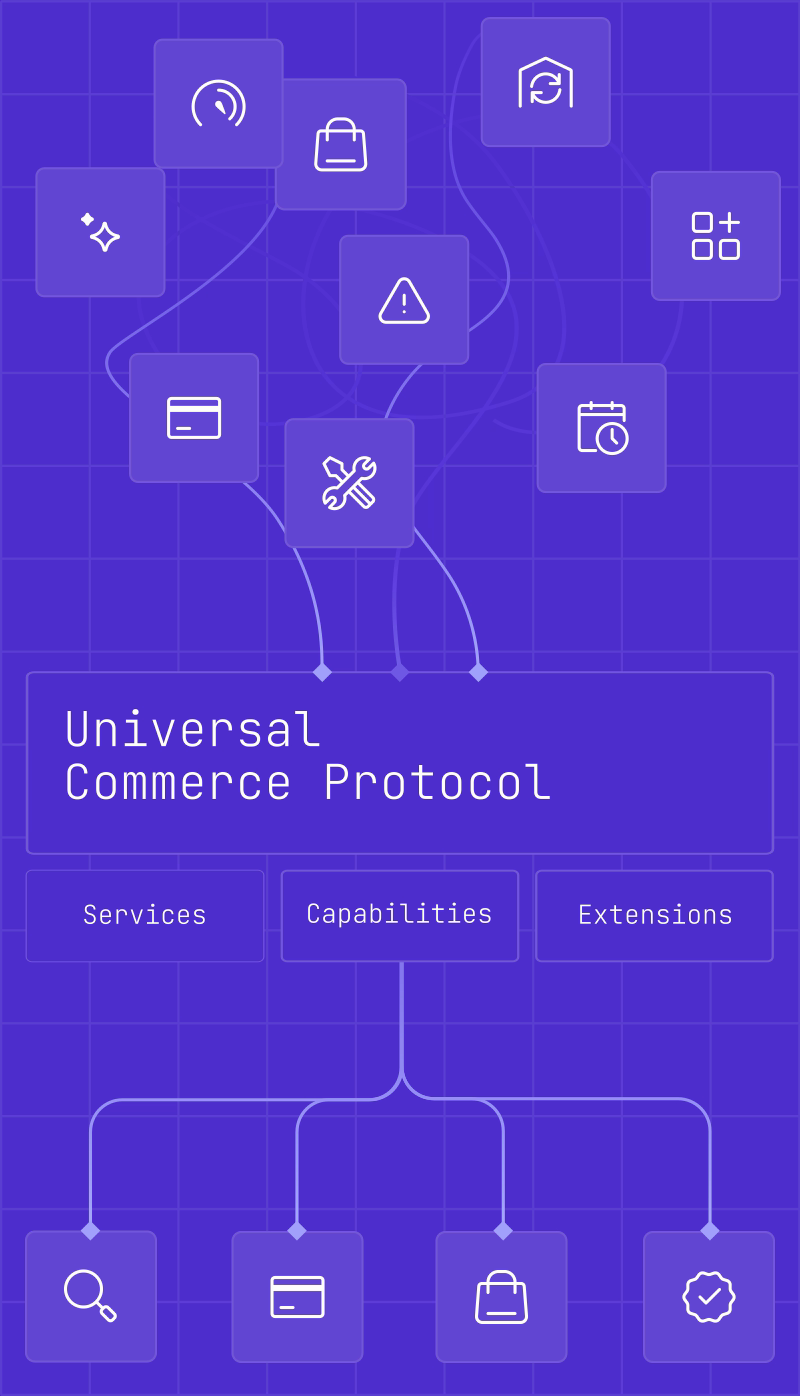
UCP is built in three layers.
Antifragile for an evolving world
The most interesting design choice is dynamic negotiation. Instead of every brand and every agent agreeing a fixed contract in advance, each side declares its capabilities at run time and the protocol works out what is possible. A merchant that supports subscriptions, loyalty points and three fulfilment options simply advertises them; an agent that understands those features uses them; one that does not still completes a basic purchase. Shopify calls this “antifragile,” and the label fits, the standard is meant to keep working as both merchants and agents add features no one has thought of yet.
Agents and customers, working together
UCP does not assume the agent does everything. It bakes in human-in-the-loop escalation: a checkout can move from create_checkout to ready_for_payment to complete, but the flow can also branch to “requires escalation” and hand control back to a person before resolving to a completed order. For higher-consideration D2C purchases, the ones where a shopper wants reassurance before paying, that escalation path matters as much as the automation.
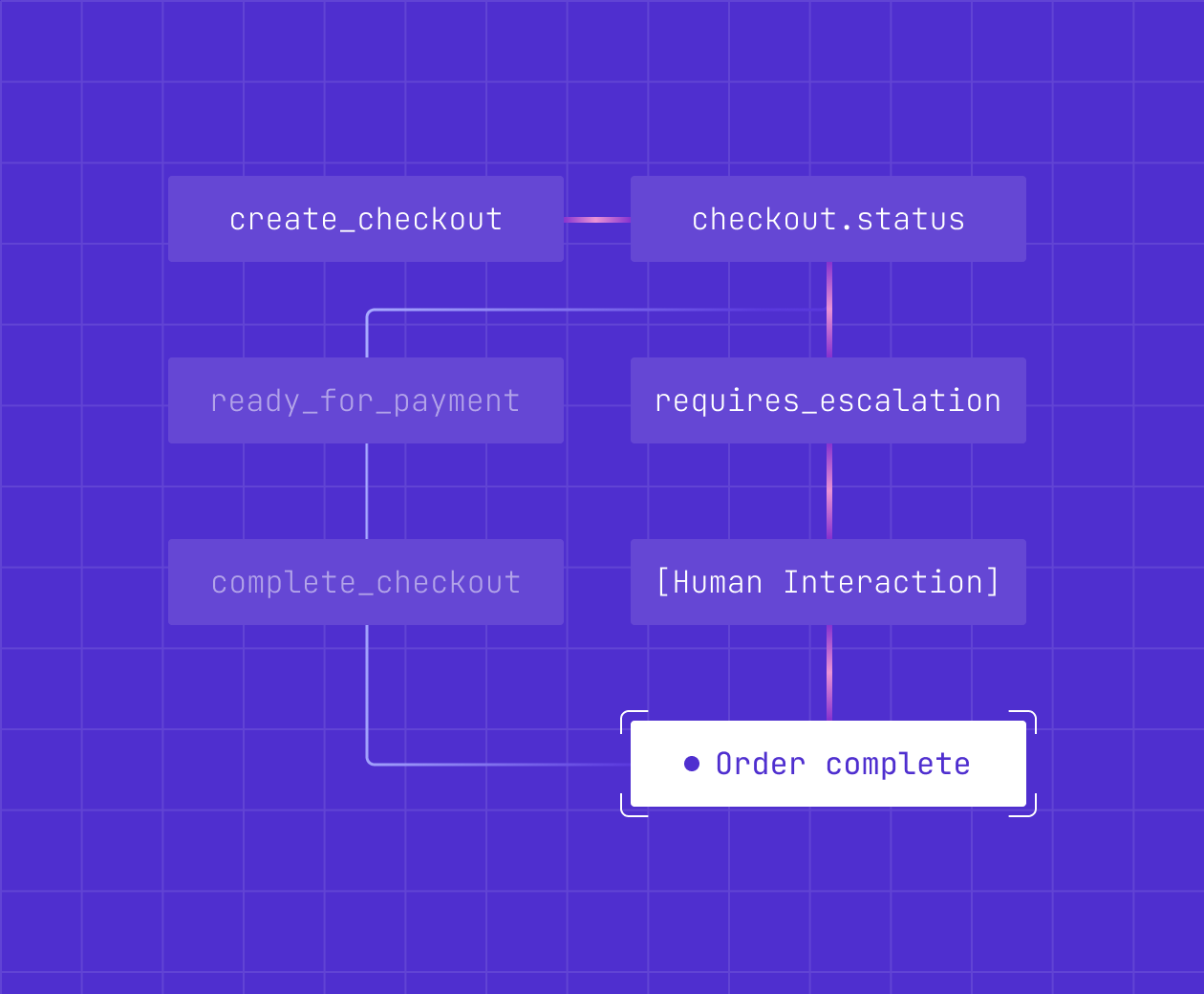
Embedded checkout, rendered by the agent
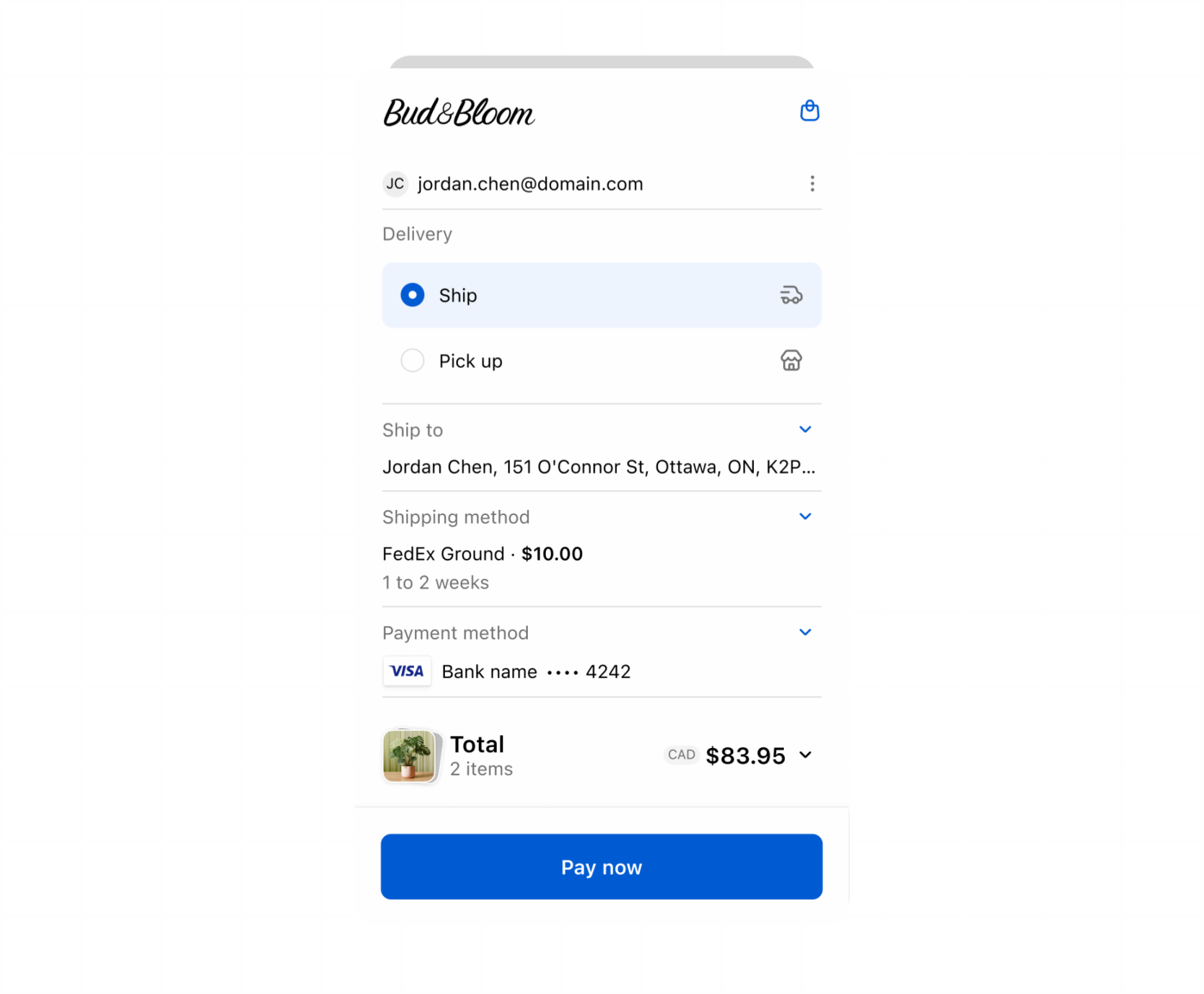
Alongside UCP sits the Embedded Commerce Protocol (ECP), which lets the actual checkout experience be rendered inside the agent’s interface, payment method, shipping choice, order total and a “Pay now” button, rather than bouncing the shopper out to a browser. The buyer never leaves the conversation. For brands this is the part to sit up for: when the storefront is reduced to a card inside someone else’s chat, your product data, pricing and trust signals do the selling, not your site design.
What a D2C brand should do about it
UCP is early, and the names attached to it, Shopify, Google, and early supporters including Target, Wayfair and Etsy, tell you the direction of travel rather than today’s reality. You do not need to implement a protocol this week. You need to get ready for the world it describes, which rhymes exactly with the answer-engine shift already reshaping search.
- Treat your product feed as primary creative, clean titles, complete attributes, accurate price and availability are what an agent reads when it decides whether to recommend and transact you.
- Surface your real commerce features, subscriptions, loyalty, fulfilment options, in structured, machine-readable form, because dynamic negotiation can only offer what you declare.
- Make your trust signals portable: reviews, ratings and guarantees that travel into an embedded checkout card, not just onto your homepage.
- Stay close to the answer layer, being the product an AI cites is the same muscle as being the product an agent buys.
Whether UCP specifically becomes the standard or merely sets the template, the underlying message is hard to dodge: commerce is going agentic, and the transaction is moving into the conversation. The D2C brands that win the next few years will be the ones whose data, pricing and proof are clean enough for a machine to choose them, long before a human ever lands on the site.